
Welcome To Business Blog
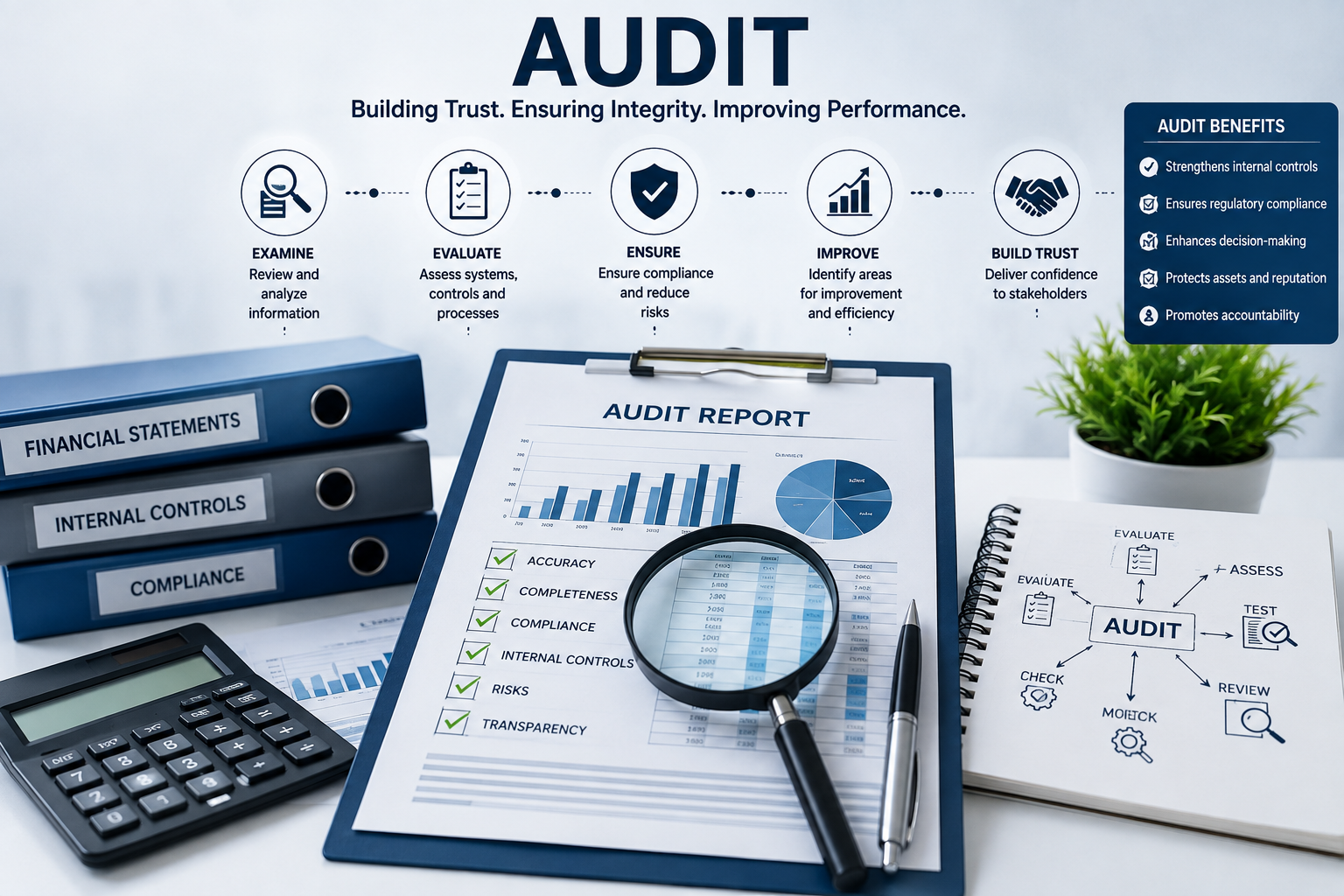
What is an audit, and how does it work?
An audit is when someone not involved checks information, records, processes, or systems to make sure they are correct, trustworthy, and following rules.To put it simply, what is an audit?It is a way to see if what is happening is the same as what is being shared.
Many people want to know what an audit really is.They want to learn about being open in business.Even though the words can be different, the answer is still the same: an audit helps people trust the information they get.
A New Way to Look at Audits
Most articles say audits are just about finding mistakes.But actually, the best audits work like a GPS for a business.They do more than just point out problems; they also show where good chances are hiding.A business that welcomes audits often finds smarter ways to do things, better controls, and makes wiser choices.
Understanding Audit Assertions
One really important idea in checking finances is audit assertions.These are things that the managers say about the money details.
Some usual audit assertions are:
Existence
Completeness
Accuracy
Valuation
Rights and Obligations
Presentation and Disclosure
Auditors look at these statements to make sure that the money information really shows how a business is doing.
What Is an IT Audit?
An IT audit looks at technology systems, how we keep them safe, and how we handle data.As more businesses use digital tools, IT audits make sure of:
Keeping data safe
Making sure systems work well
Following the rules
Working efficiently
A good IT audit helps keep companies safe from online dangers and expensive problems with their systems.
Audit Checklist
A simple audit checklist usually has:
Say what the audit goals are.
Know the process that is being checked.
Gather proof and papers.
Check the controls and transactions.
Spot risks and any problems.
Write down what you find.
Suggest ways to make things better.
Check on the actions taken to fix things.

Audit Financial Statement
To audit a financial statement means to look closely at a company’s money reports to see if they show the truth about how the company is doing financially.
Audited financial statements help:
People who invest know what to do.
Banks understand how safe it is to lend money.
Companies look more trustworthy.
People involved believe the numbers shown.
Define “audited.”
To explain what “audited” means, it just means someone who knows a lot has checked and confirmed the information, following certain rules.
A report that has been audited is usually seen as more trustworthy than information that hasn’t been checked by someone else.
Audit Spanish Meaning
A lot of people from different countries look for audit-Spanish-translation.The word “audit” usually means “auditoría” in Spanish, and “auditor” is either “auditor” or “auditor(a)” depending on the situation.
Knowing what an audit means is not just about knowing a business word.Audits help build trust, show hidden problems, and find chances that people might miss.Whether it’s a computer audit, checking financial reports, or learning about audit claims, audits help groups make choices based on facts instead of just guessing.
- Direct Service Booking: “Ready to ensure your financial statements are accurate and compliant? Schedule a consultation with our expert audit team today.”



[…] Before investing time and money, research your target audience. Identify who your ideal customers are, what they want, and who your competitors are. This helps you discover opportunities and avoid costly mistakes. […]
[…] An auditor is a trained professional who evaluates records, systems, and controls to provide an independent opinion.What Do Auditors Do? […]
[…] or a public office. The staff gets angry. The police come. People often call this a First Amendment audit. But what does it really mean? Let’s understand it in simple […]