Welcome To Business Blog
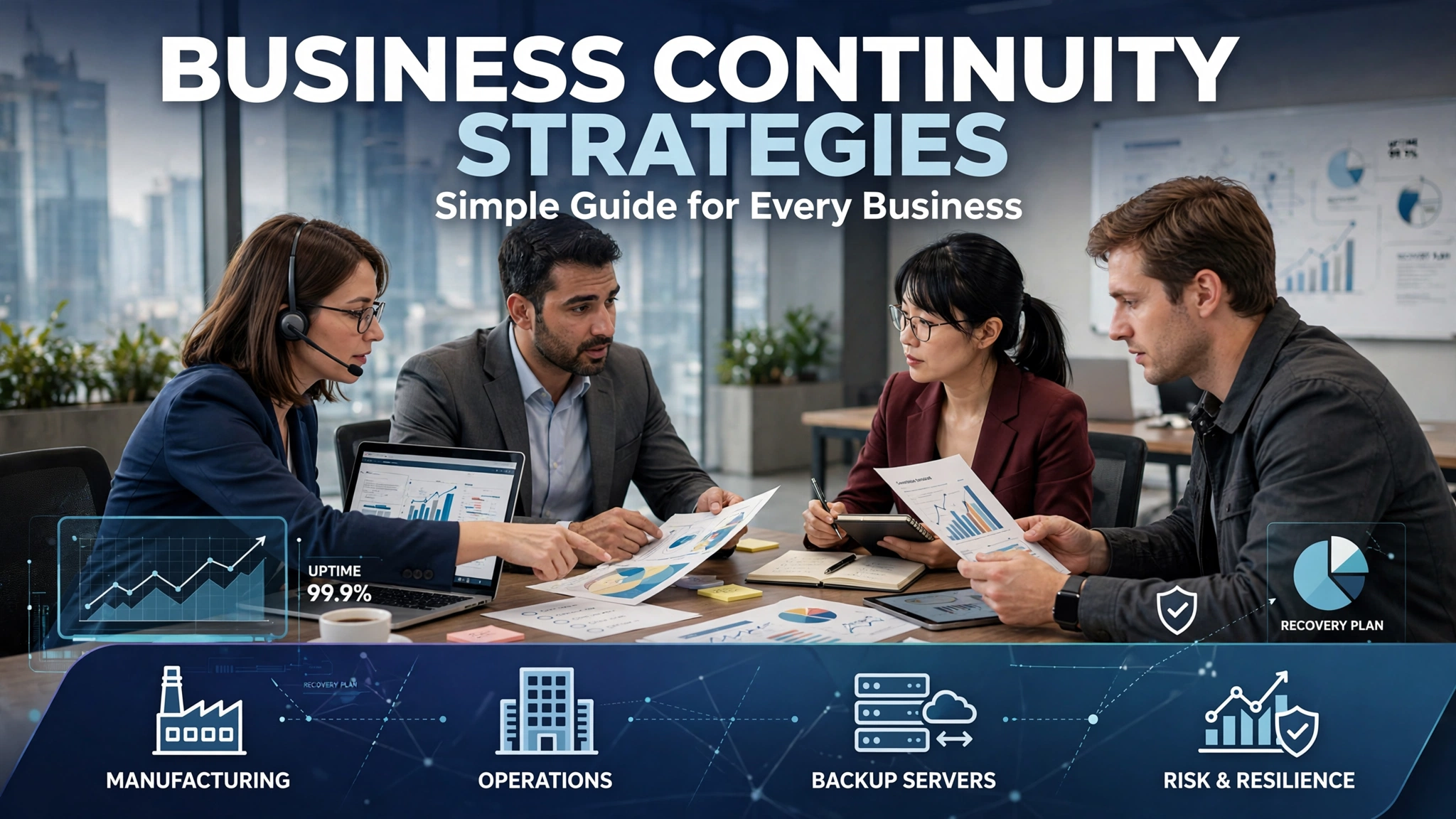
What Are Business Continuity Strategies? Simple Guide
Every business faces problems. A power cut, fire, cyberattack, or staff shortage can stop your work. What will you do then? This is where business continuity strategies help. They are simple plans to keep your business running even in bad times.
What Are Business Continuity Strategies?
Business continuity strategies are backup plans. They tell you what to do when normal work stops. The main goal is to protect your people, money, and customers. A good strategy helps you work without long breaks. It keeps trust with your customers. In simple words, it is a plan to never close your business, even in a crisis.
Why Business Continuity Strategies Are Important
Problems can come any time. If you have no plan, you lose money and customers. If you have a plan, you stay strong. Business continuity strategies save time and reduce stress. They help you recover fast. They also show your clients that you are professional and ready for anything.
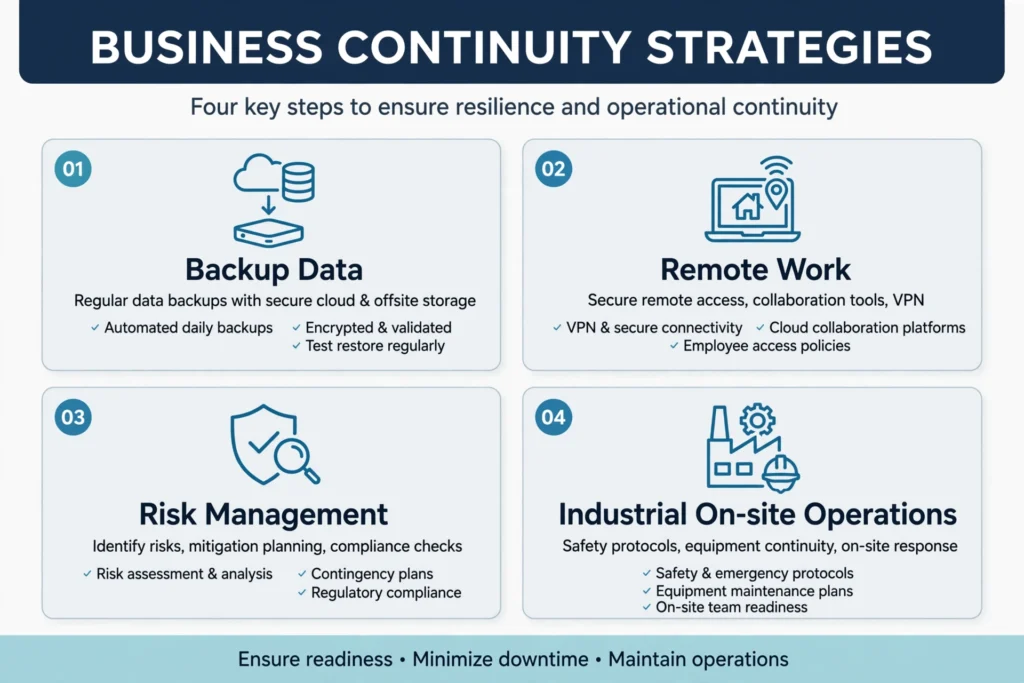
Main Business Continuity Strategies You Need
- 1. Make a Risk List
- As a next step, identify potential failures. Is it a flood? Is it system failure? Is it a loss of key staff? Write all risks down. When you know the risks, you can make a better plan.
- 2. Create a Backup Plan for Data
- Data is everything. Save your important files on the cloud and on an external drive. Do backup daily. If one system fails, you can use the backup and keep working. This is a top business continuity strategy.
- 3. Make a Communication Plan
- In an emergency, your team needs clear info. Who will call whom? How will you talk to customers? Make a list of phone numbers and emails. Use WhatsApp, email, or a group call to stay connected.
- 4. Keep Remote Work Ready
- Today, work can happen from home. Give your team laptops and internet access. Use tools like Zoom and Google Drive. If the office is closed, your team can still work from home.
- 5. Train Your Team
- A plan is useless if your team does not know it. Train them. Do a small drill every 3 months. Tell everyone their role in a crisis. A trained team works fast and calmly.
- 6. Find Alternate Suppliers
- If your main supplier stops, your business stops. So keep a second supplier ready. This is a smart business continuity strategy for shops and factories.
Business Industrial Activities On-Site
Business industrial activities on-site mean the daily work that happens inside your factory or office. This includes machine work, packing, loading, quality checks, and safety checks. For business continuity, you must protect these on-site activities. Keep extra machines, keep safety tools ready, and make a clear shift plan. If one machine stops, another should start. If one area is unsafe, work should move to another safe area. This keeps production running with no big loss.
How to Build Your Own Business Continuity Plan?
Start small. Take one paper. Write your top 3 risks. Then write what you will do for each risk. Add phone numbers of key people. Save it where everyone can see it. Review your plan every 6 months. Update it when your business grows. Good business continuity strategies are simple, not complex.
In the end, business continuity strategies are not just for big companies. Every small shop and factory needs them. They save you from big losses. They keep your customers happy. They keep your business alive in hard times. So don’t wait for a problem. Make your plan today and stay safe tomorrow.